Life on the Lake
Steel: the hard shell for premium living in Quebec
Story: Ian VanDuzer
Photography: Stéphane Groleau
Bryan Lagacé does not design cookie-cutter houses. The Partner at SGD A - Architecture + Design says that most of the residences he and his firm work on start at $1.5 million. “We do some restoration,” he says, which makes sense seeing as SGD A’s home is in Quebec City, the oldest European city in North America. “But, increasingly, we do original design for luxury residences.”
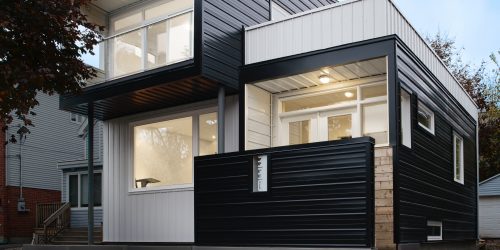
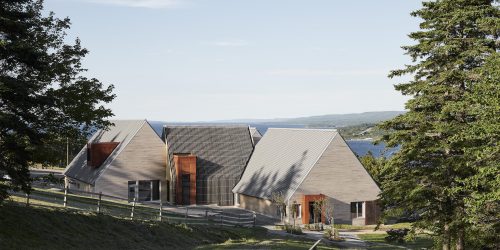
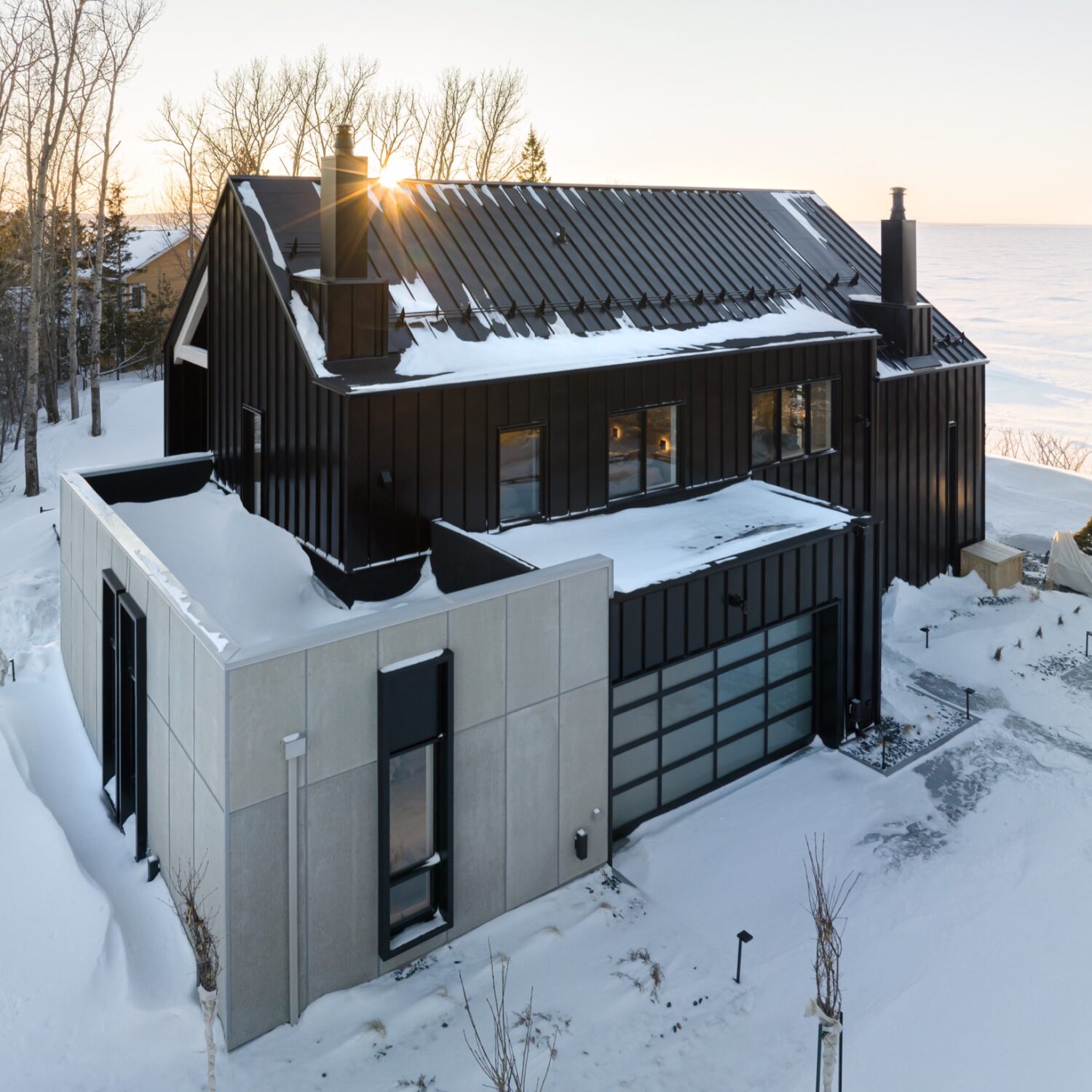
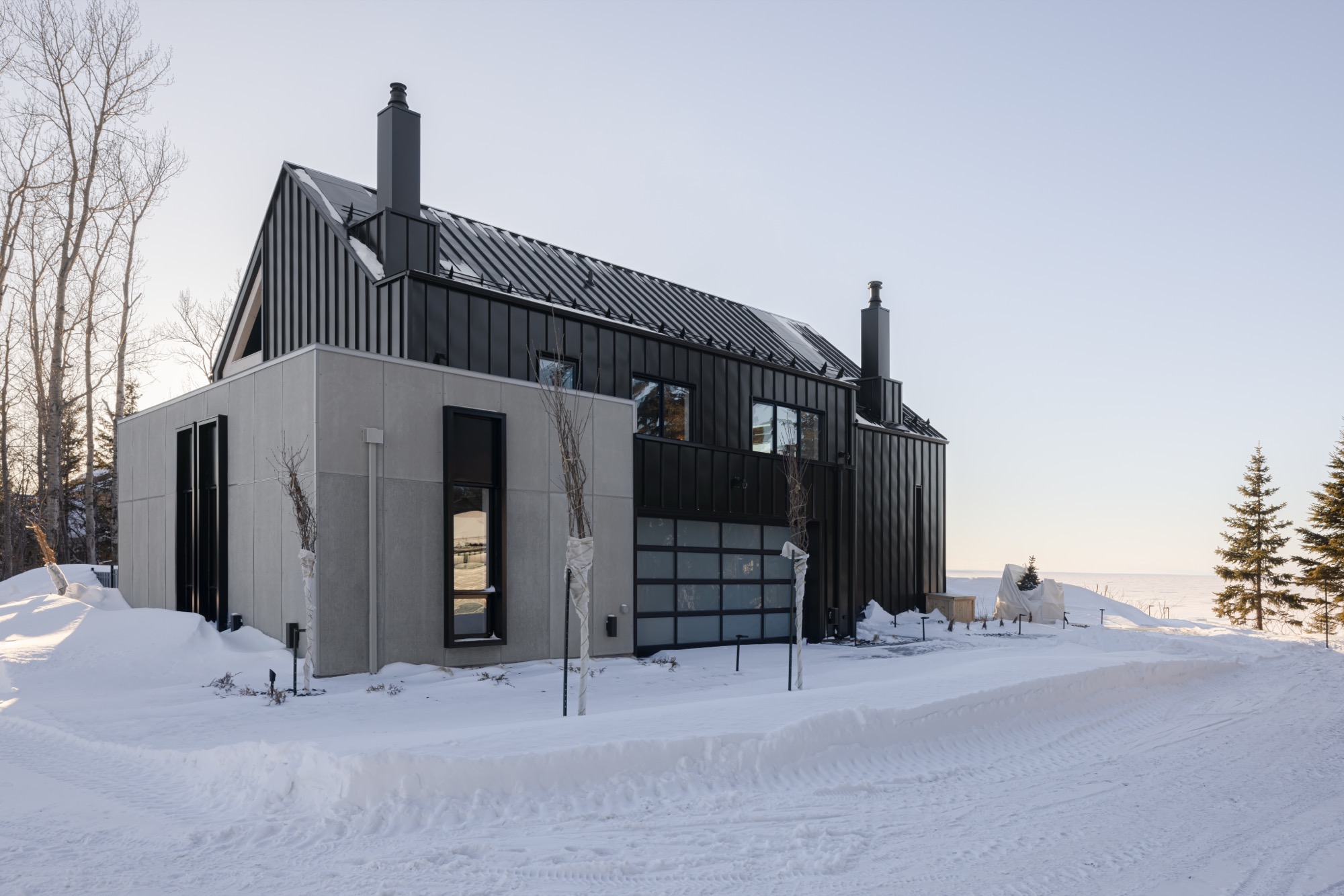
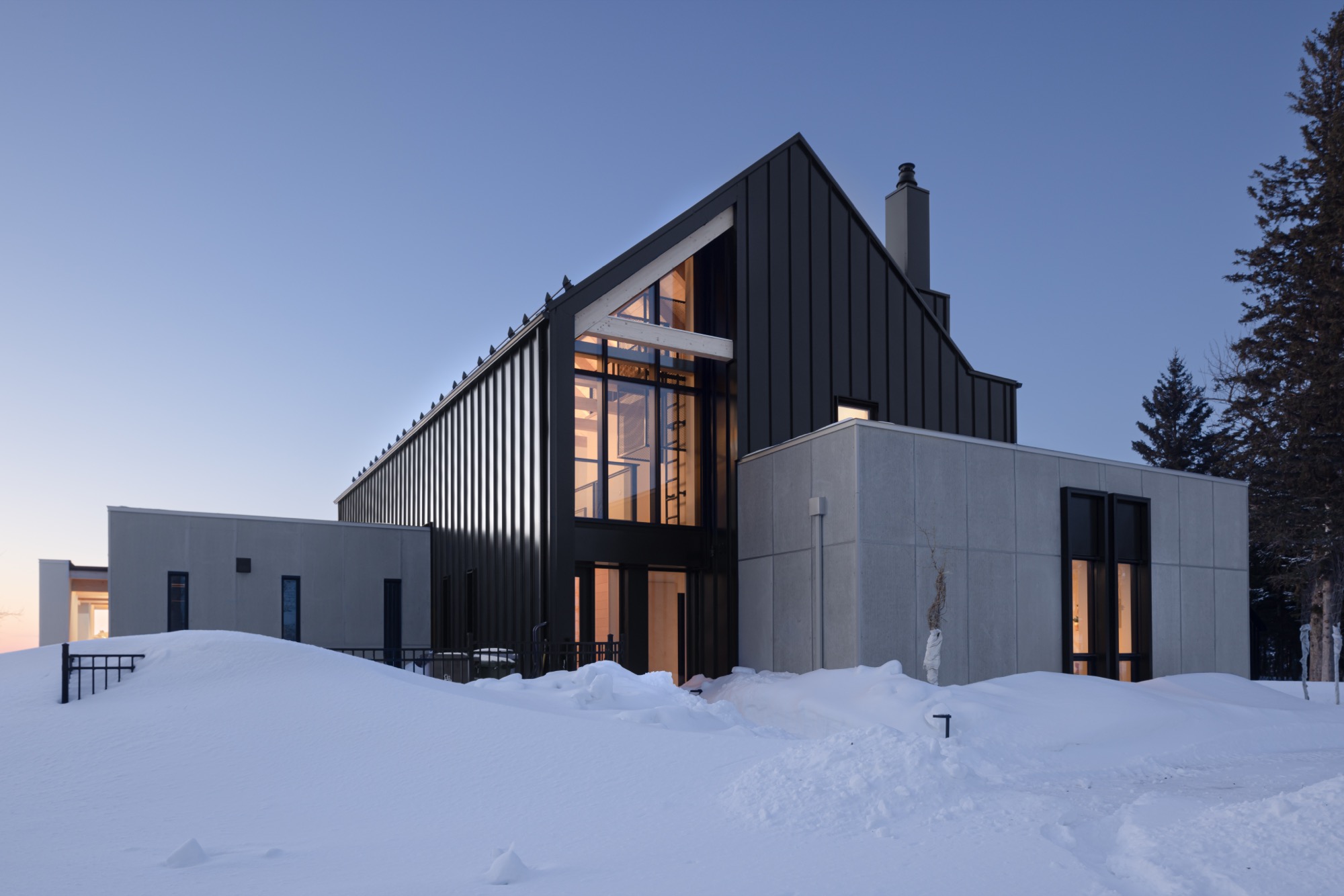
Take, for example, the aptly named Refuge de la plage (translation: “Refuge on the lake”), an all-seasons Nordic-inspired “cabin” in the community of Métabetchouan, on the shores of Lac Saint-Jean. Sheathed in dark steel, the modern facade shields an open and bright interior highlighting natural woods and industrial concrete accents. It’s an absolutely gorgeous building.
“The clients wanted a space where they could retire one day,” Lagacé explains, and he took that aspiration and ran with it.
“It’s a conversation.”
Design, Lagacé says, is about the relationship between different spaces, materials, and functions. “A house is not only the architecture,” he explains. “It has to link with the landscape, and the interior design. All of those things have to connect and talk to each other.”
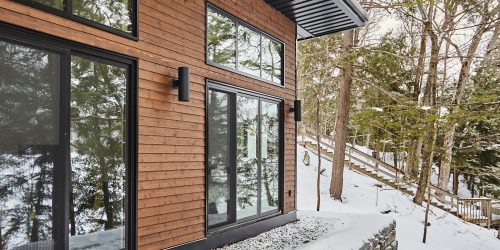
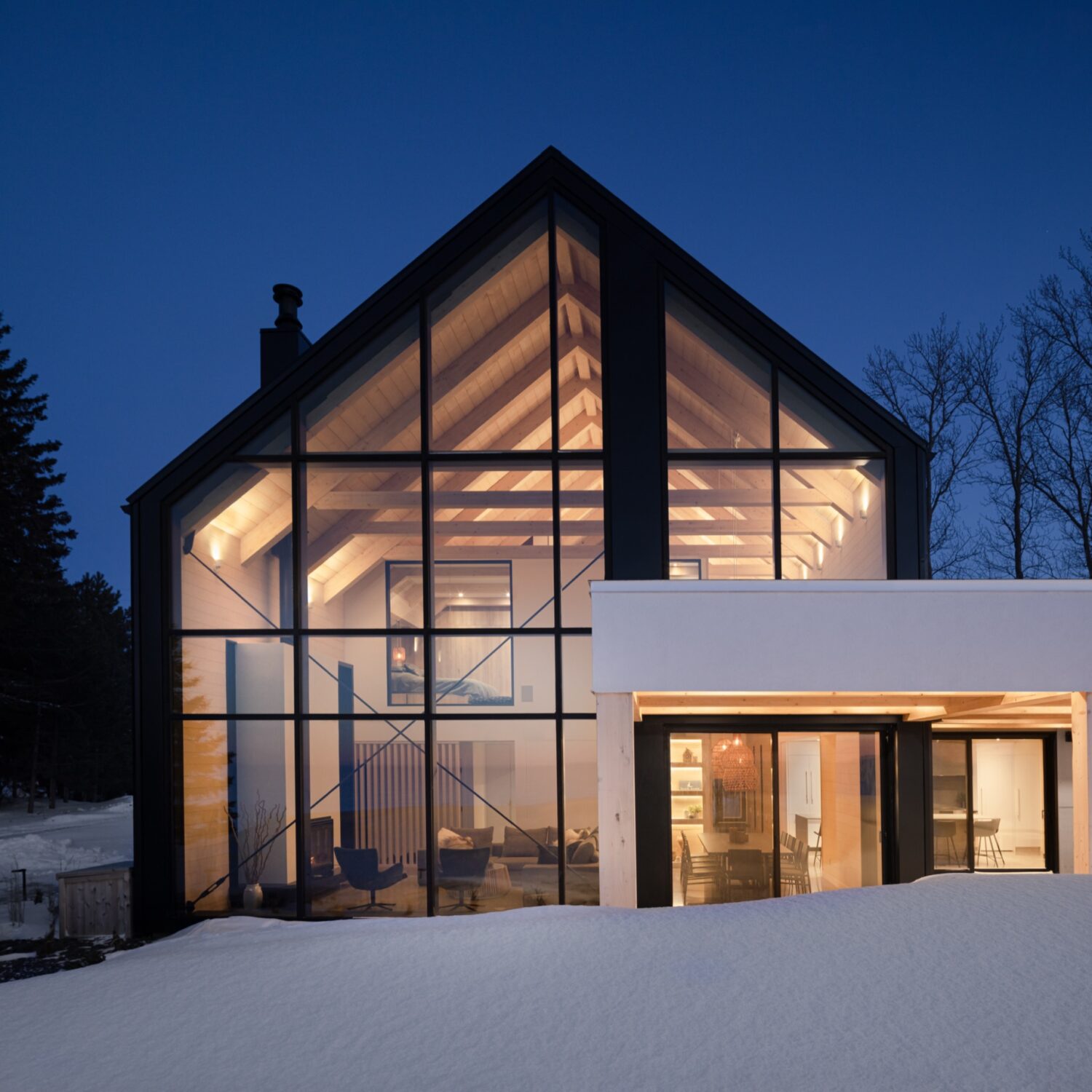
Balancing space, materials, and design—and how each complement each other—is how the Refuge de la plage came to be: surrounded by cedar and fir trees, and with a two-storey window wall that overlooks the lake, the interior connects with the landscape by drawing in woods and natural materials inside the residence. Uniform wooden planks line the walls and ceilings of the main living space.
But the Refuge is not rustic, by any stretch of the imagination; elevated would be a better word to describe its design. Cool concrete floors and counters in the kitchen and bathrooms, paired with black metal accents—on the fireplace, fixtures, and ladders—bring a modern-industrial feel to the space.
A covered patio (framed by acrylic-covered wood “for a seamless surface”) and separate outdoor kitchen stretch the living space outside, creating a harmonious movement between interior and exterior… when the weather suits!
Steel exteriors
It’s the exterior envelope where steel really enters the conversation. To hear Lagacé speak on the design, the sheet-steel exterior was one of the easier things to plan for. “We had criteria from the client,” Lagacé recalls, counting the requirements on his fingers: “They wanted a sustainable building. They wanted something with low maintenance. They needed something that would last the entire year-round.
“And,” he smiles, “it had to look good, of course.”
Those requirements cut the list of possible materials down. “We considered cedar shingles, or wood paneling,” Lagacé says. “But those require much more maintenance than steel.”
So, steel it was. Even though steel paneling was the only real answer, Lagacé wants to make it clear that they did not feel pigeonholed into using the material. Steel, he says, perfectly complemented the design that SGD A wanted to pursue for the Refuge.
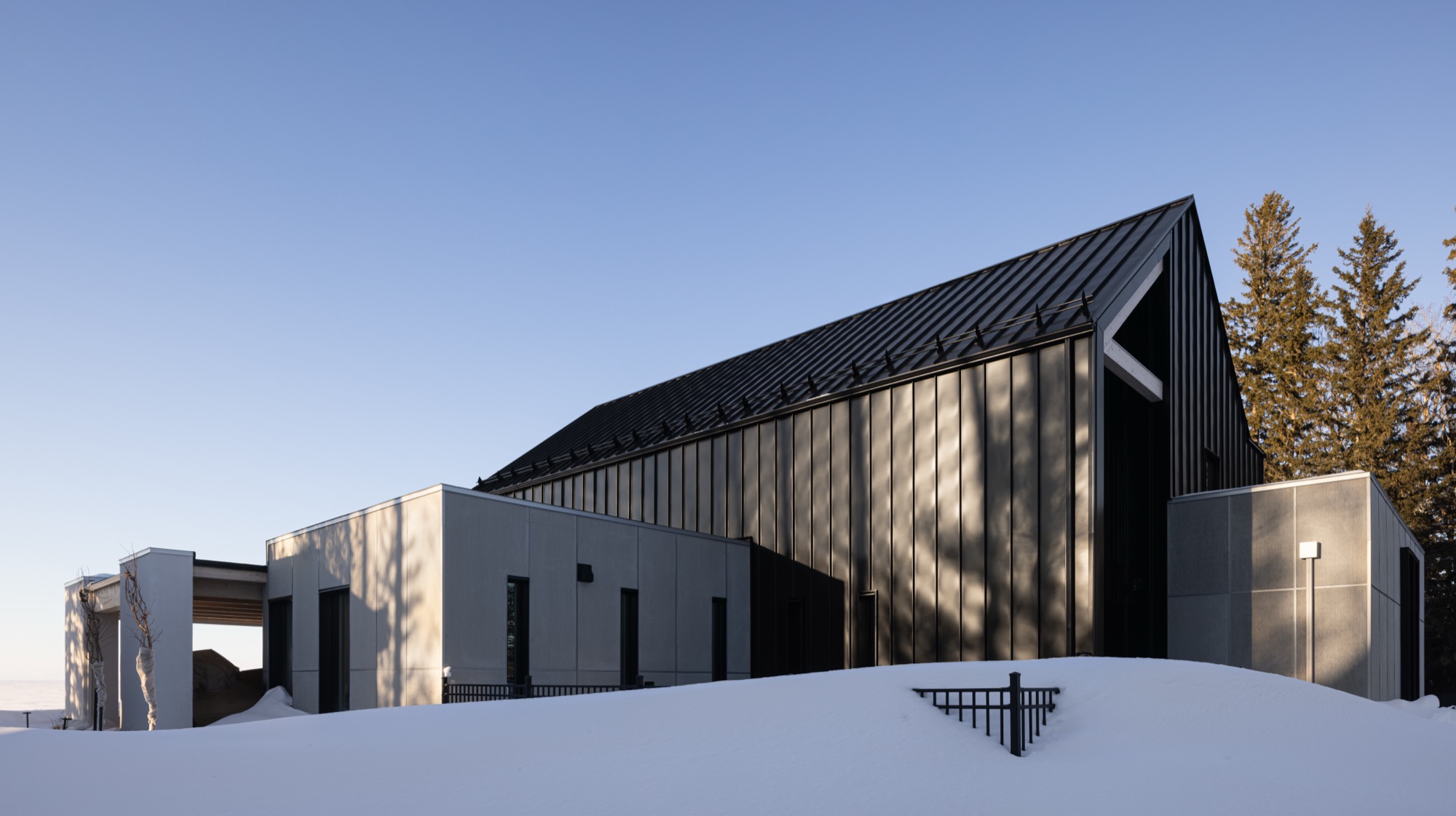
“We wanted a Scandinavian design,” he explains. “So, we wanted the roofing and the walls to be continuous. The steel panels made that design easy to execute, to design a flush wall-to-roof that was really slick. “
The simplicity of the exterior envelope was chosen not to detract from the real show-stopper of the design: the massive windows offering the residents their unparalleled views. Concrete extensions—and the aforementioned patio—add visual interest and prevent the design from feeling anything close to monotonous.
Paint it black
The envelope colour was another consideration. Going back to the windows, Lagacé said his team initially struggled with integrating the window into the overall house. “We really wanted to use natural materials,” he recalls, “but we had trouble matching the materials to the colour of the flashing.”
“Black was the easiest way to melt it all together, and to make the window look like it was a hole in a bigger block,” Lagacé says. “And there you go! You have windows.”
Lagacé’s design also had to contend with a large span of the same colour from wall-to-roof. Black-coated steel was chosen for its neutrality. “We wanted something that wouldn’t stand out too much, and that would age well,” Lagacé explains. Knowing that the clients hope to retire to the Refuge, Lagacé aimed to use calm neutrals that would remain in style for decades.
Durability was another consideration. “In Quebec, we need a material that can hold up to the ice and snow,” Lagacé says. “And a material that needs less maintenance as well.”
Lagacé says that, even when their projects go in a different direction, SGD A overwhelmingly still uses steel roofs. “We don’t always use it for the walls,” he says. “But for the roof, we often go back to steel.”
That’s not to say that the Refuge is the only SGD A project that uses steel siding. “We’ll use it when we want more of a timeless look,” Lagacé says. “Either with painted steel, or a more natural steel.”
“Easy to work with”
Even though SGD A hasn’t often used steel panels for the walls—at least to this extent—Lagacé says that using the panels didn’t present a challenge. “They were quick and easy to use,” he remembers. “We ended up using a contractor that was more used to working on commercial projects, but there were no hiccups using the panels.”
“We didn’t have any issues sourcing them, either,” Lagacé continues. “Even though this project was built during COVID, when everyone was building similar refuges and cottages.”
The Refuge de la plage, Lagacé says, is a project he is particularly fond of. “We have a great relationship with the client,” he says. “You always hope to have that sort of relationship. They were very supportive and excited about our crazy ideas.”
That freedom led to something truly gorgeous. “I still look at it, and I’m like, this was a really great project,” he grins. “It’s really beautiful.”
SPECIFICATIONS
DESIGN:
SGD A - Architecture + Design
STEEL FABRICATORS:
Vicwest Building Products
PRODUCT:
Prestige 16” panel, 26 gauge, with concealed fasteners, black (code 56068)