Growing Good
Steel shells incubate incredibly productive microfarms
Story: Ian VanDuzer
Photography: Daniel Banko
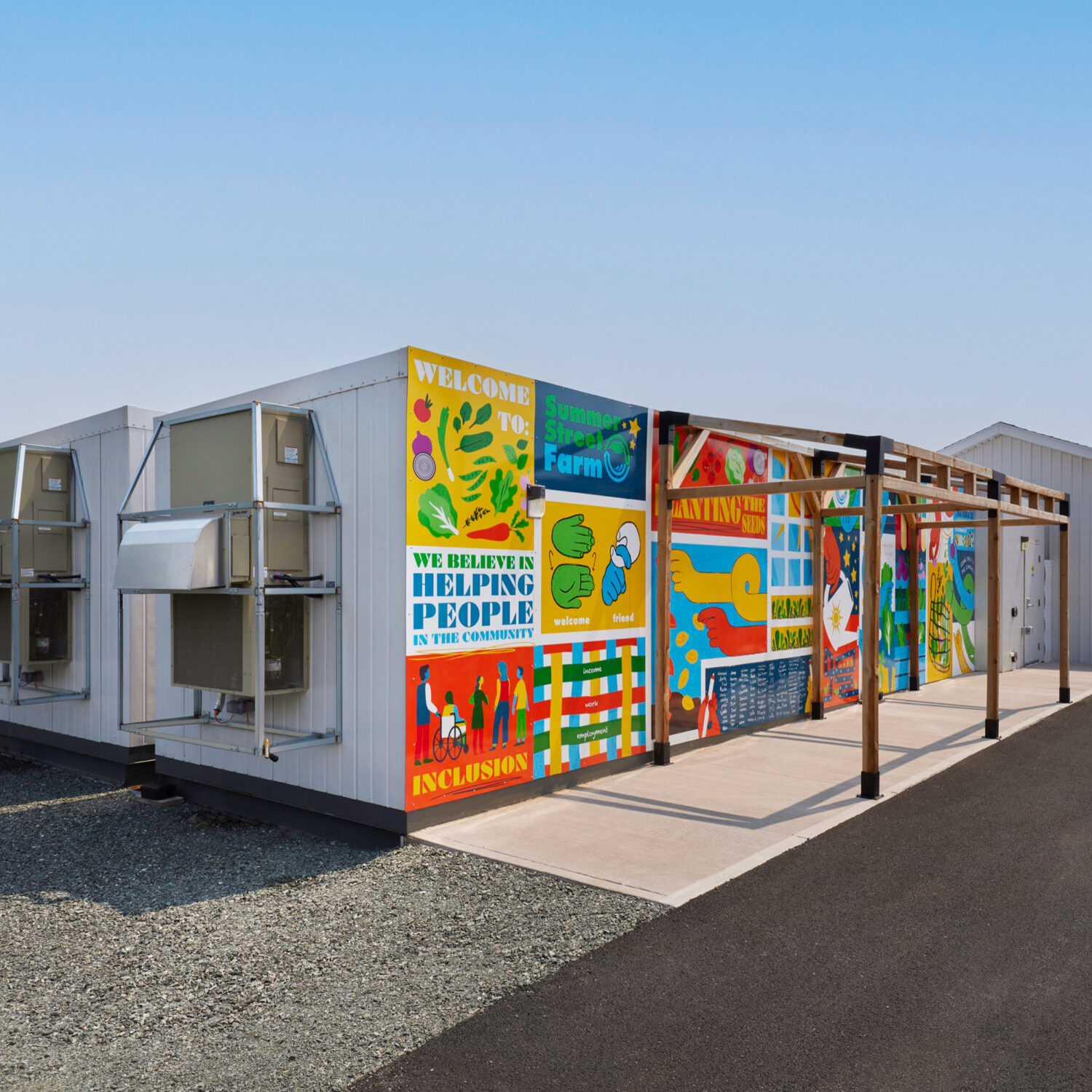
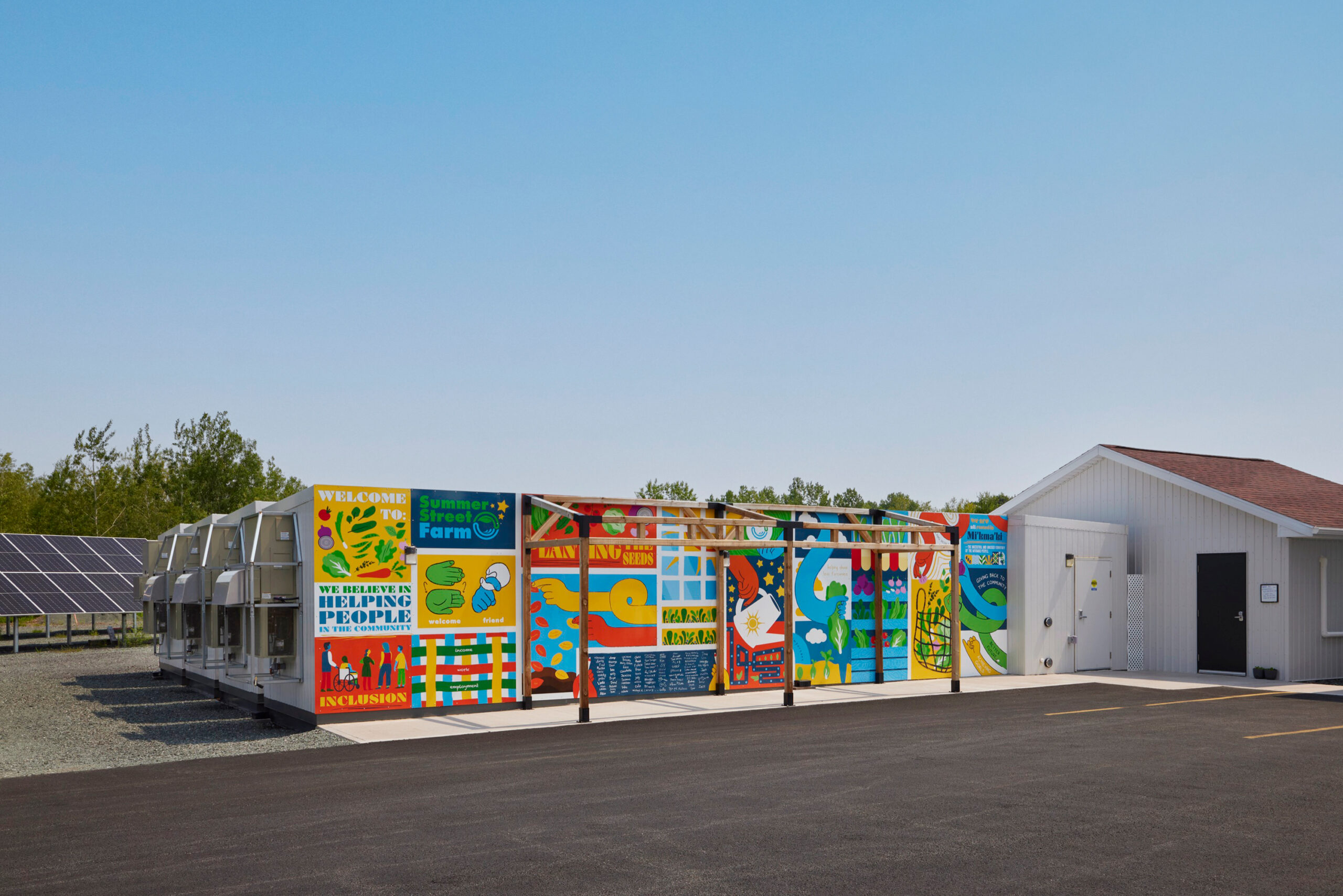
A cold January morning on the Northumberland Strait — the “north coast” of winter-laden Nova Scotia —seems like a strange time to open a new farm. But then again, the new Summer Street Farm isn’t your typical plants-in-the-ground farm at all. Instead, the farm can be found inside a metal box wrapped in colourful steel paneling.
The hydroponic farm is designed by Growcer, an Ottawa-based company that was initially founded in response to high food costs in northern communities. It’s a serious need — according to Statistics Canada, 60% of Nunavut (Canada’s northernmost territory) residents are food insecure, and food prices have risen by 22% (as opposed to 12% across the rest of the country) in recent years.
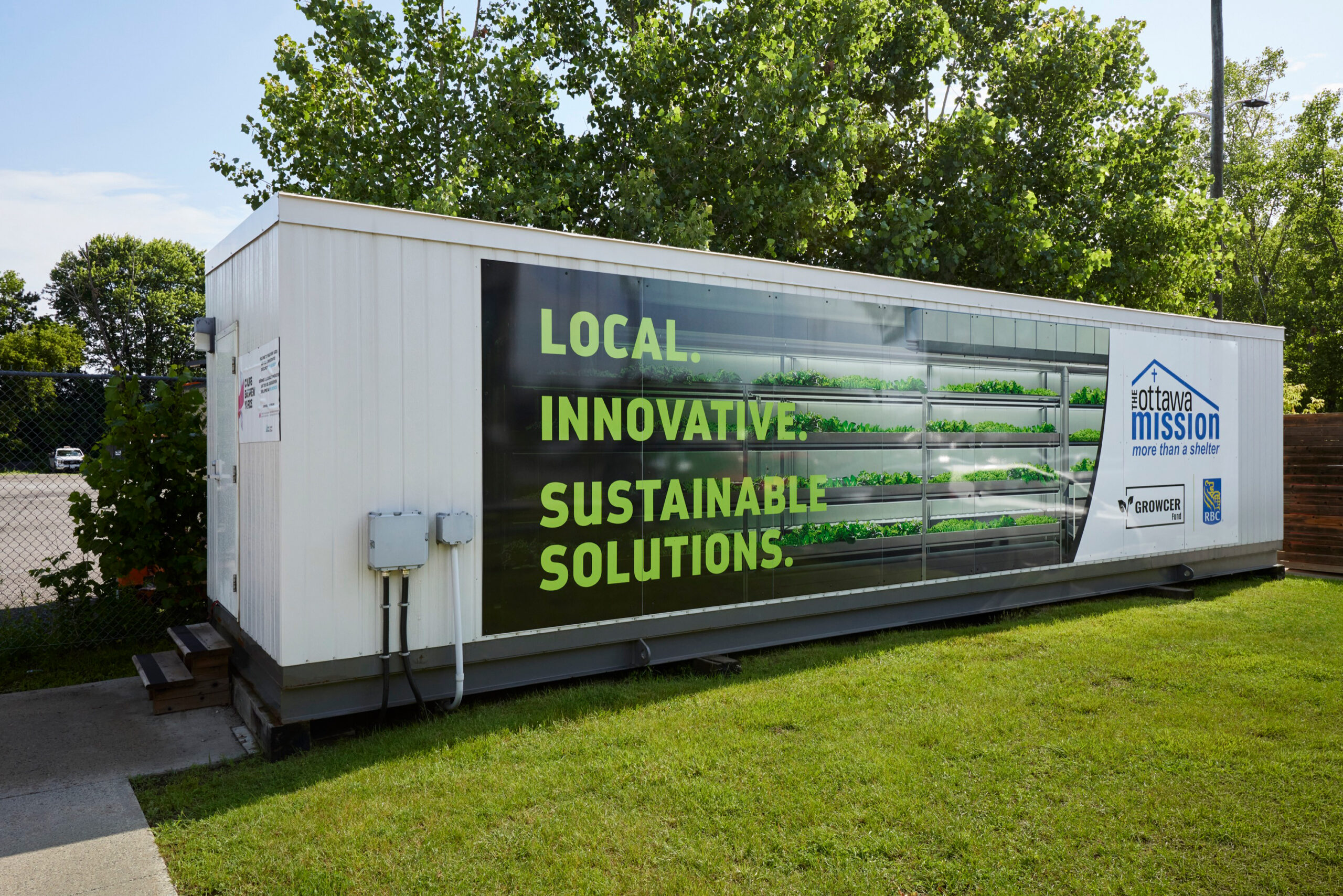
“The idea was to grow food in a really tightly insulated building envelope that allows our customers to produce food all year round, even if it's minus-50 outside with blizzard conditions,” says Corey Ellis, Co-Founder and CEO of Growcer.
“We looked and saw that there wasn’t a lot of food in the north,” says Ellis. “But what they have a lot of are shipping containers.” Ellis and his Co-Founder Alida Burke decided to retrofit these containers with insulation and hydroponic trays, creating an amazingly efficient, self-contained farm system.
Growcer saw immediate success with their shipping container-based farms. While their focus was initially rural, Ellis says that the farms — especially the ones made out of prefabricated steel panels, and not shipping containers — are increasingly being shipped to urban areas. “We have a Growcer farm in almost every major city in Canada,” he boasts.
“The idea that we’re trying to work toward is: little farms everywhere.”
Growing Growcer
But there were limitations with the original shipping container design. While the containers — made of corrugated steel — were easy to come by in the north, verifying what had been in them was more challenging. “In many cases, we could not prove exactly what was stored in the containers,” Ellis explains. “And so it became something that sounded good in theory, but in practice became very, very challenging.”
So, in 2020, Growcer decided to make a change. “At the time, we were building in the US, and we wanted to find a Canadian manufacturer,” Ellis says. “Then we found Artspan.”
The steel fabricator, based in Winkler, Manitoba — a 90 minute drive outside of Winnipeg — provided what Growcer initially needed: an integrated production facility that could receive all of the specialized parts — from racking systems to electronics to ventilation ducts — and put all of the pieces together before shipping the farms worldwide. But there was an extra advantage to choosing to partner with Artspan Inc. “They have an amazing product in their structural panels,” says Ellis. “We realized not only could we build something new, we could also make a higher quality product, we could build it to specs.”
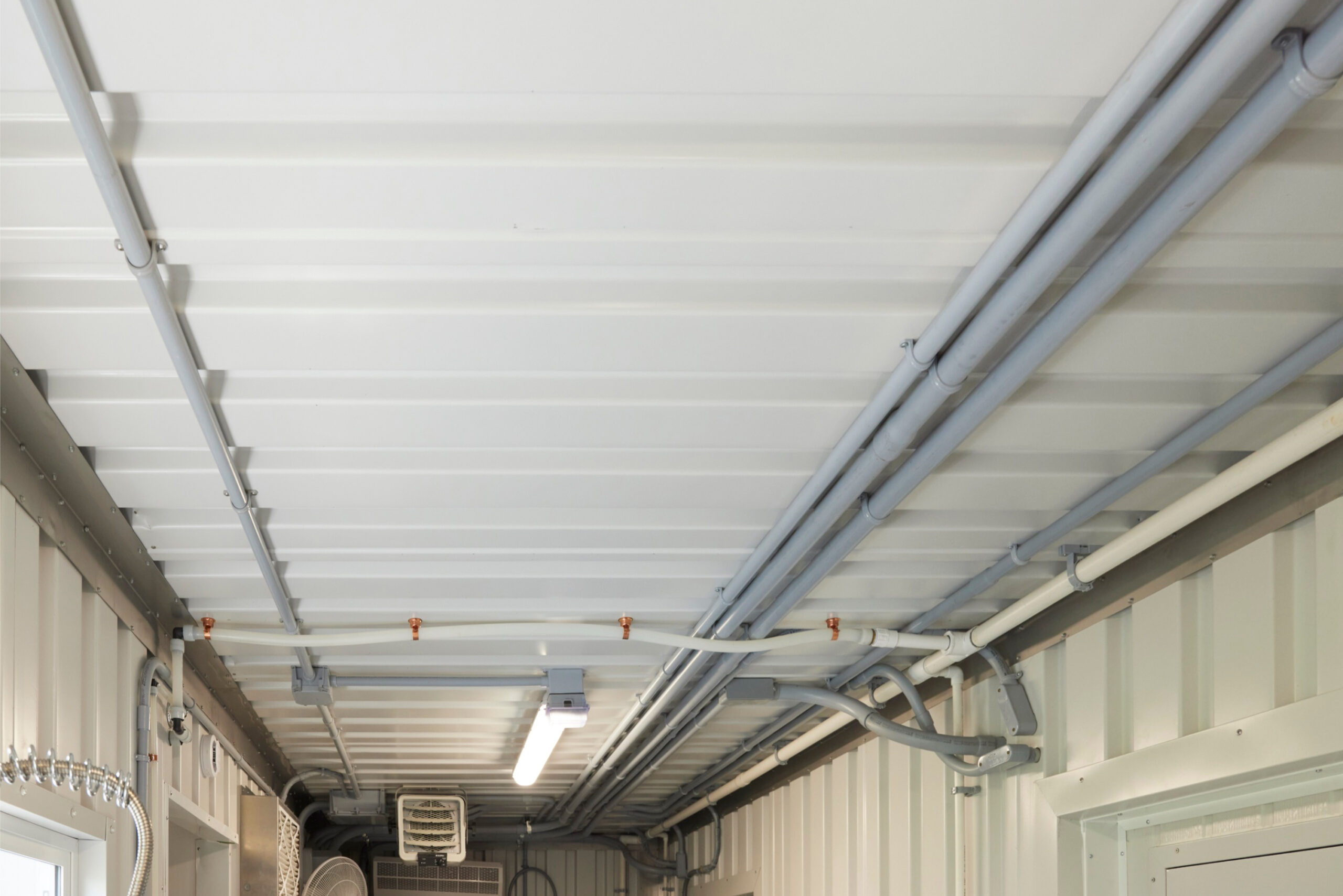
Artspan’s modular system is now at the core of Growcer’s farms. The structural panels have an insulated core between two sheets of Galvalume™-coated steel, giving them strength above and beyond most similar panels.
“It seemed like a perfect match,” says Chad Thiessen, Artspan Inc.’s Director. “Growcer’s farms are in the right size range for our panels’ structural strength. It’s a great relationship.”
With the entire assembly happening under one roof — and with the major structural components being fabricated across the shop floor — Ellis says that a new Growcer farm can go from a myriad of parts to ready-to-ship in the span of a month. As in other construction projects, steel helps things get built fast!
The advantages of structural panels
Thiessen adds some additional advantages of the modular system: “Since the panels are structural, you don’t need framing, and you don’t need studs,” he says. “So you don’t have thermal leaks anywhere in the building, because you have one continuous layer of insulation.”
This makes the panels perfect for Growcer, whose farms are designed for the harshest Canadian climates.
Building the farms from scratch also meant not being constrained by the envelope of the shipping containers. “The new farms are slightly larger,” Ellis explains. “They’re slightly wider, so it’s nicer to work in.”
“A container has a flat roof, which is not ideal in heavy snow regions,” he continues. “But we now have a pitched roof to be able to shed the snow that falls.”
The panels have empowered Growcer to further alter their designs, offering different versions of farms optimized for different crops. “We don’t call them “customizable”,” Ellis smiles. “But they are configurable.”
Inside the farms
New Growcer farms — like the now-up-and-running Summer Street Farm — are designed to be modular, with farm capsules paired with a “control bay” that oversees all of the complicated systems inside the farm. “This allows farmers to build up their farms as they go,” Ellis points out. “You can start with one module and then scale up from there.”
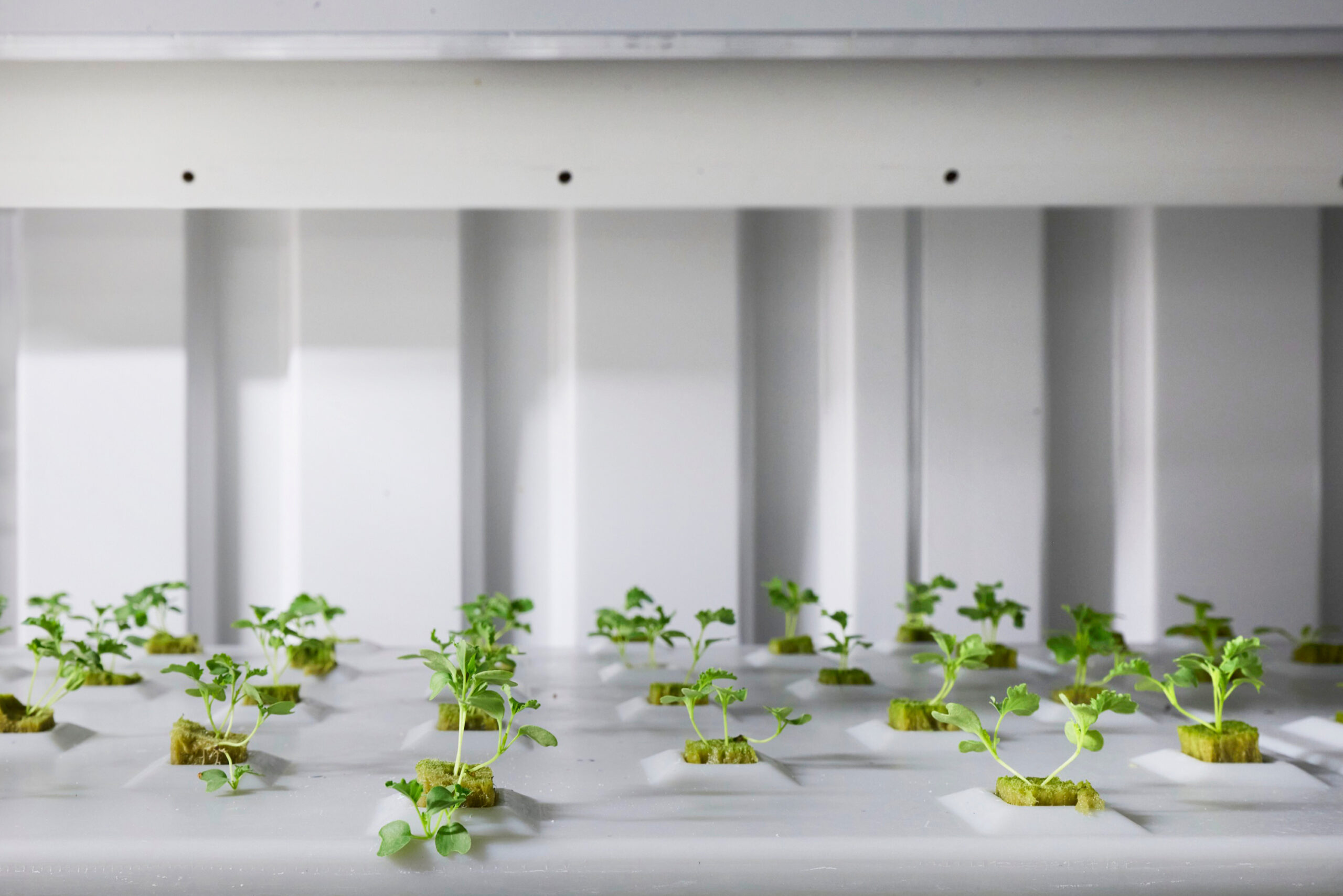
Each module is designed to produce enough vegetables for 500 people, an amazing feat for a farm that you can walk down in just a few steps. That’s because hydroponic farms can constantly be producing crops, supercharging veggies to grow faster, and more frequently, while eliminating crop loss due to pests or inclement weather.
“On a soil farm, over the course of a year, you may get two harvests,” Ellis says. “A Growcer farm averages thirteen harvests per year.”
Each plant is equipped with sensors that allow the farmers to monitor it, trickle-feeding it water and nutrients on an as-needed basis. (In terms of water usage, Ellis says that more water is used washing hands before going into the farm than is used to grow the plants themselves.) The farms are designed to be energy-efficient, too, with many farmers — like Summer Street Farm — opting to equip their modules with solar panels or other supplementary generators to help power them.
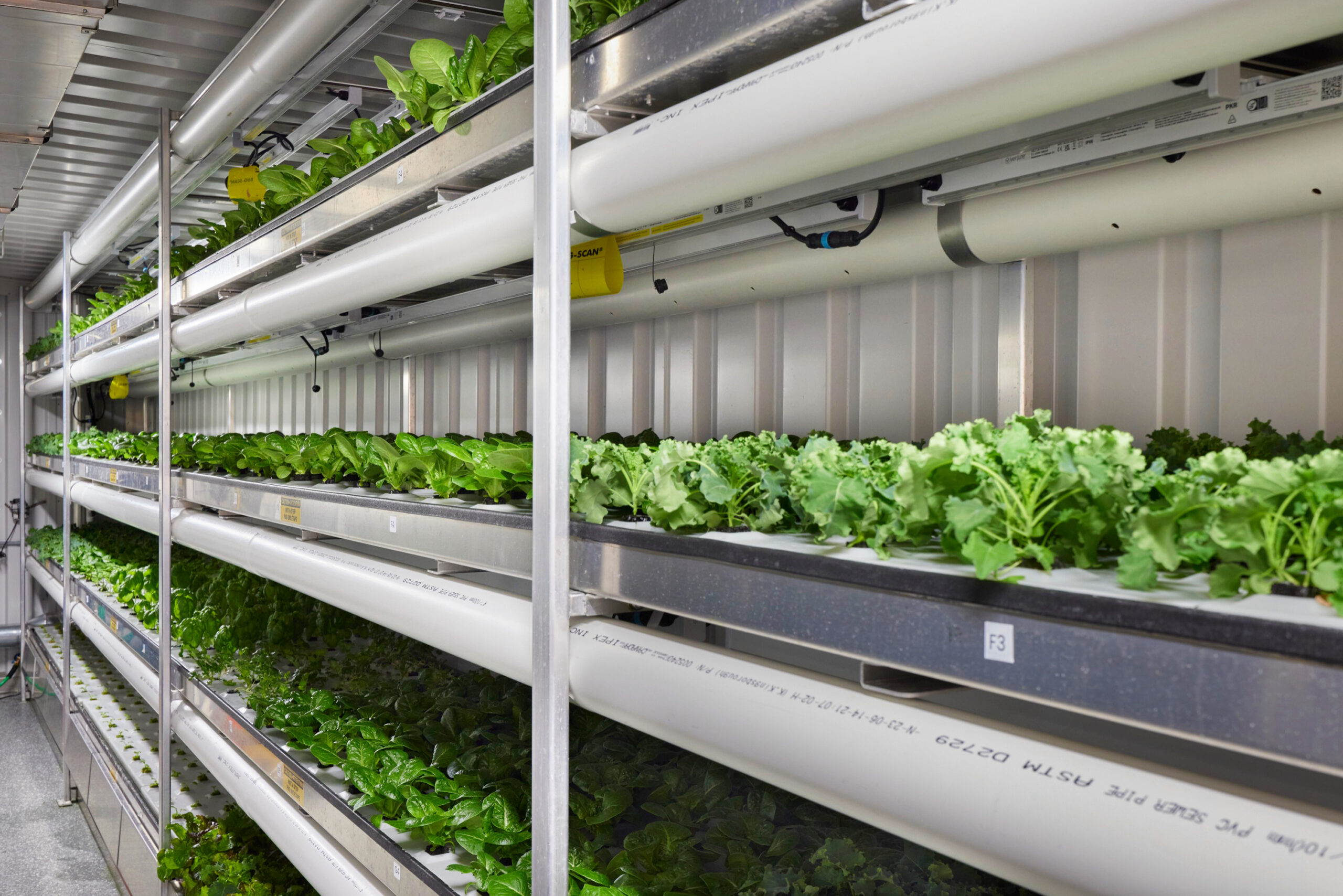
Put all of these factors together, and you have a food solution tailor-made to meet the needs of any community. Ellis says that urban Growcer farms are connected to food banks, to school cafeterias, and to new condo developments, lowering food prices just as grocery bills are skyrocketing.
Case in point: the Summer Street Farm in New Glasgow, NS uses their new Growcer farm as a social enterprise, employing people with diverse abilities and sending their produce to farmers markets and local food banks.
Meanwhile, in Ottawa, the self-contained nature of Growcer farms is proving a valuable testing ground for food scientists. Growcer itself has a research and development unit at Ottawa’s Bayview Yards—the city’s innovation and research hub—that allows them to investigate new crops and growing methods, passing that knowledge of how to best utilize their farms to their customers.
All of this is thanks to steel. “There are a lot of parts and materials inside Growcer farms,” Ellis says. “But everything structural, and everything inside that holds weight, is steel.”
SPECIFICATIONS
DEVELOPER:
Growcer
STEEL FABRICATORS:
Artspan Inc.
PRODUCT:
Artspan Summit Panel™; Galvalume™ steel sheet
STEEL:
ArcelorMittal Dofasco