Université Laval’s Tennis Courts are an Ace
Sport is for everyone. Thanks to steel, these tennis courts are, too.
Story: Ian VanDuzer
Photography: Mathieu Bélanger
In the world of Canadian University sports, few schools command the level of success and prestige as Université Laval’s Rouge et Or. The school’s athletics programs typically contend for titles not only within Quebec, but nationally as well — the school, based in Quebec City, has won 12 national football championships, the most of any school in Canada.
Laval’s newest contending sport is tennis. After finishing second in 2024, Laval captured its first women’s national title in 2025, and successfully defended its title this past season. Not to be outdone, the Rouge et Or’s men’s tennis team captured national bronze in 2026.
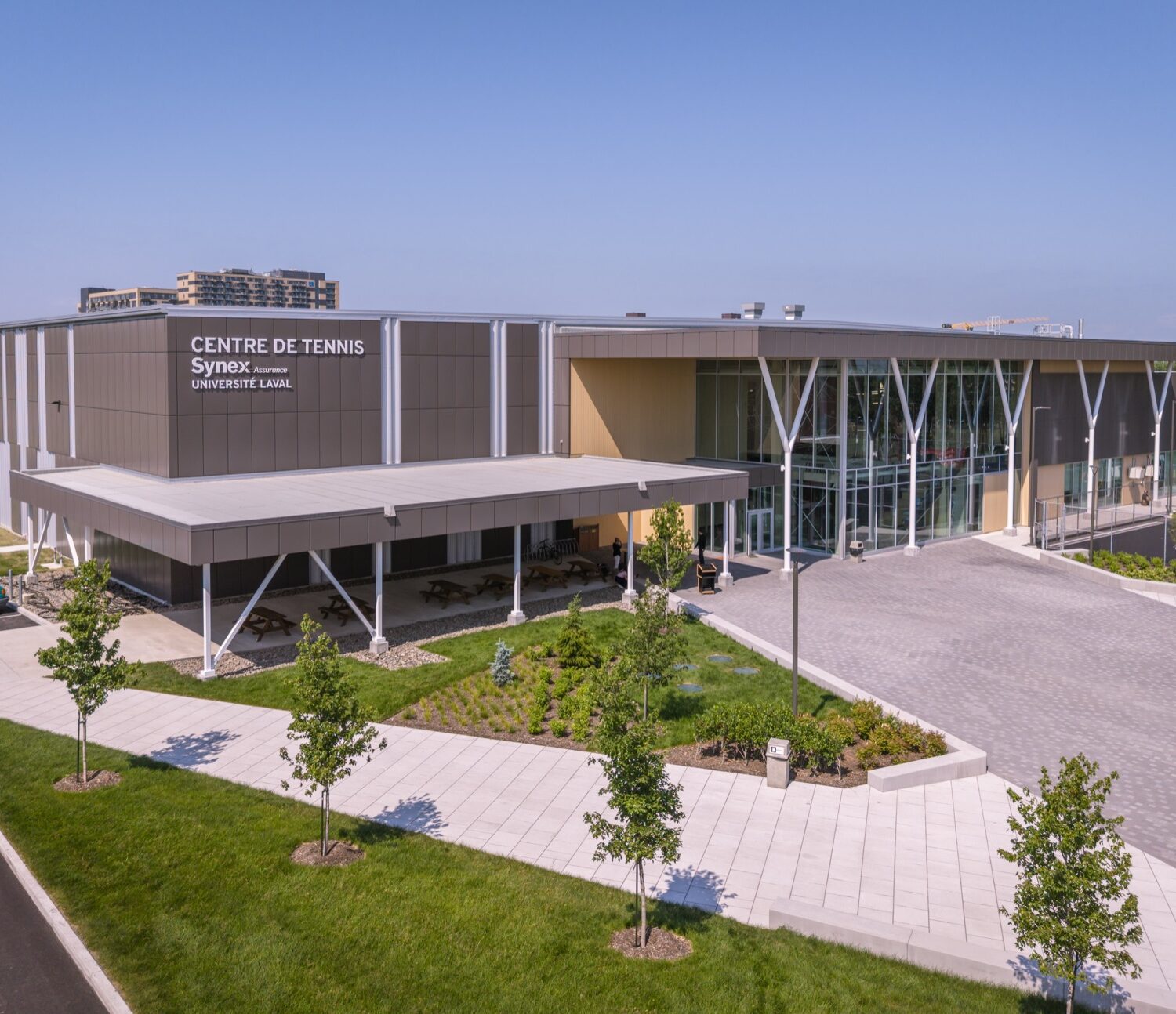
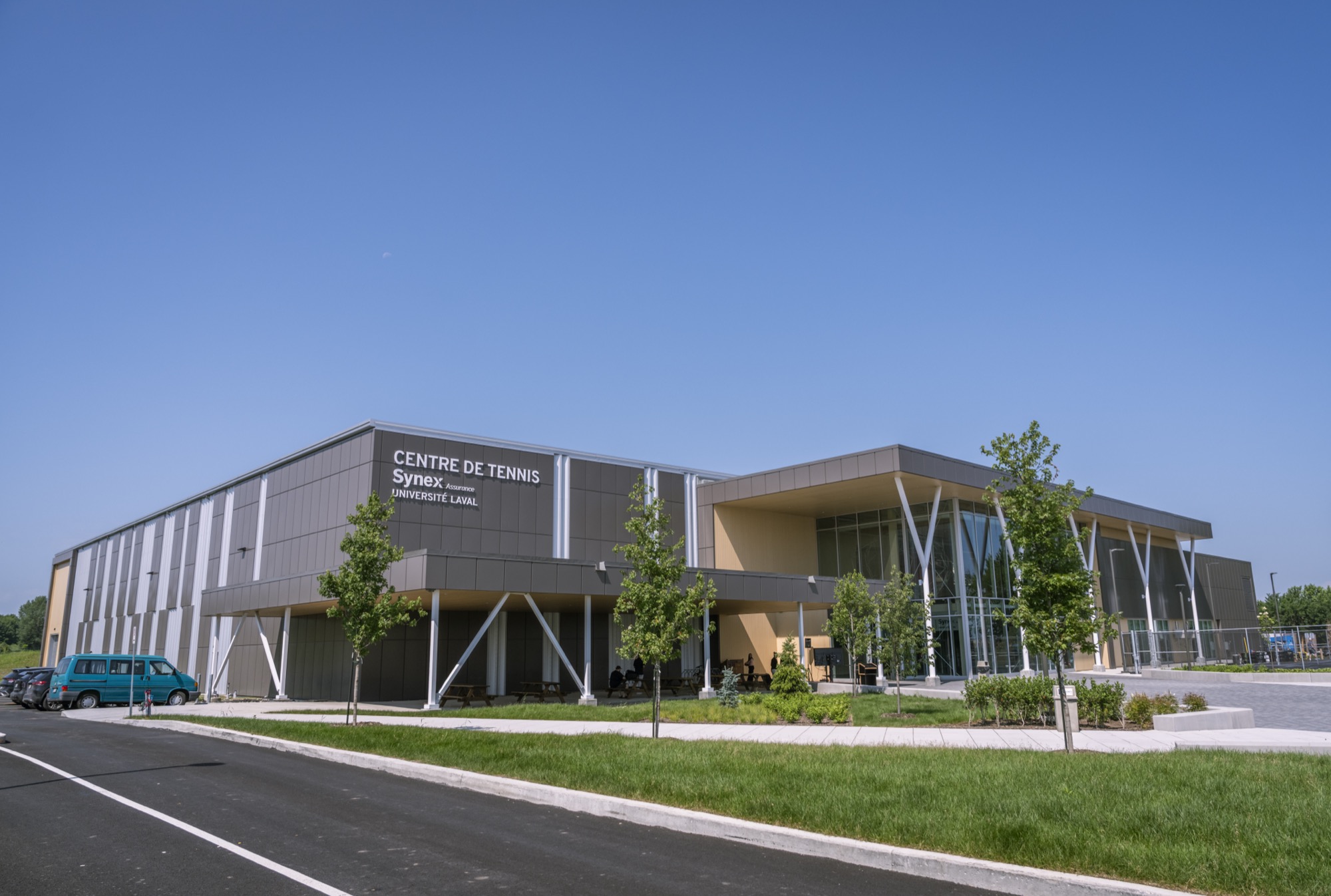
There’s a lot that goes into building a powerhouse athletics program: the athletes themselves, of course, play a huge role, as do the coaching staff and trainers. But top-notch facilities are important, too, which is why it’s no surprise that Laval’s tennis dominance has come at the same time as the construction of The Synex Insurance Tennis Centre.
An ideal place to play
When The Synex Insurance Tennis Centre opened in June, Sandrine Fortier said it met a critical need in the Quebec City area. Fortier is the Marketing & Communications Manager at Groupe Honco, the parent company of Honco Buildings, which is responsible for the facility’s design-build. “The project was developed to address a real need for additional racquet-sport infrastructure in the Québec City region while supporting Université Laval’s broader mission of promoting physical activity, community participation and high-performance sport,” she answers.
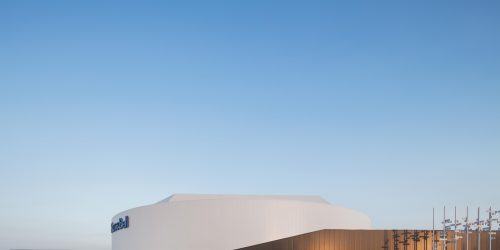
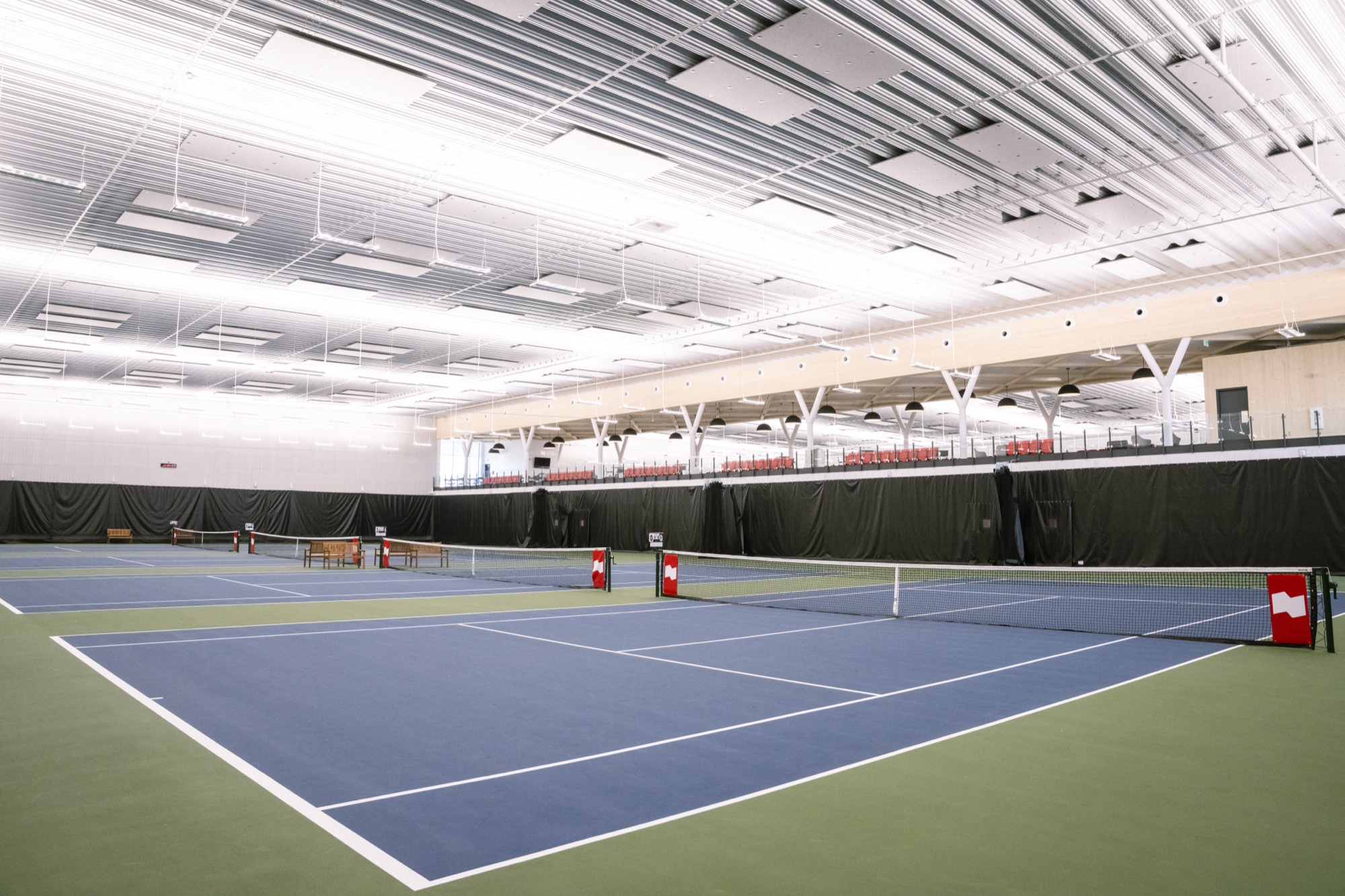
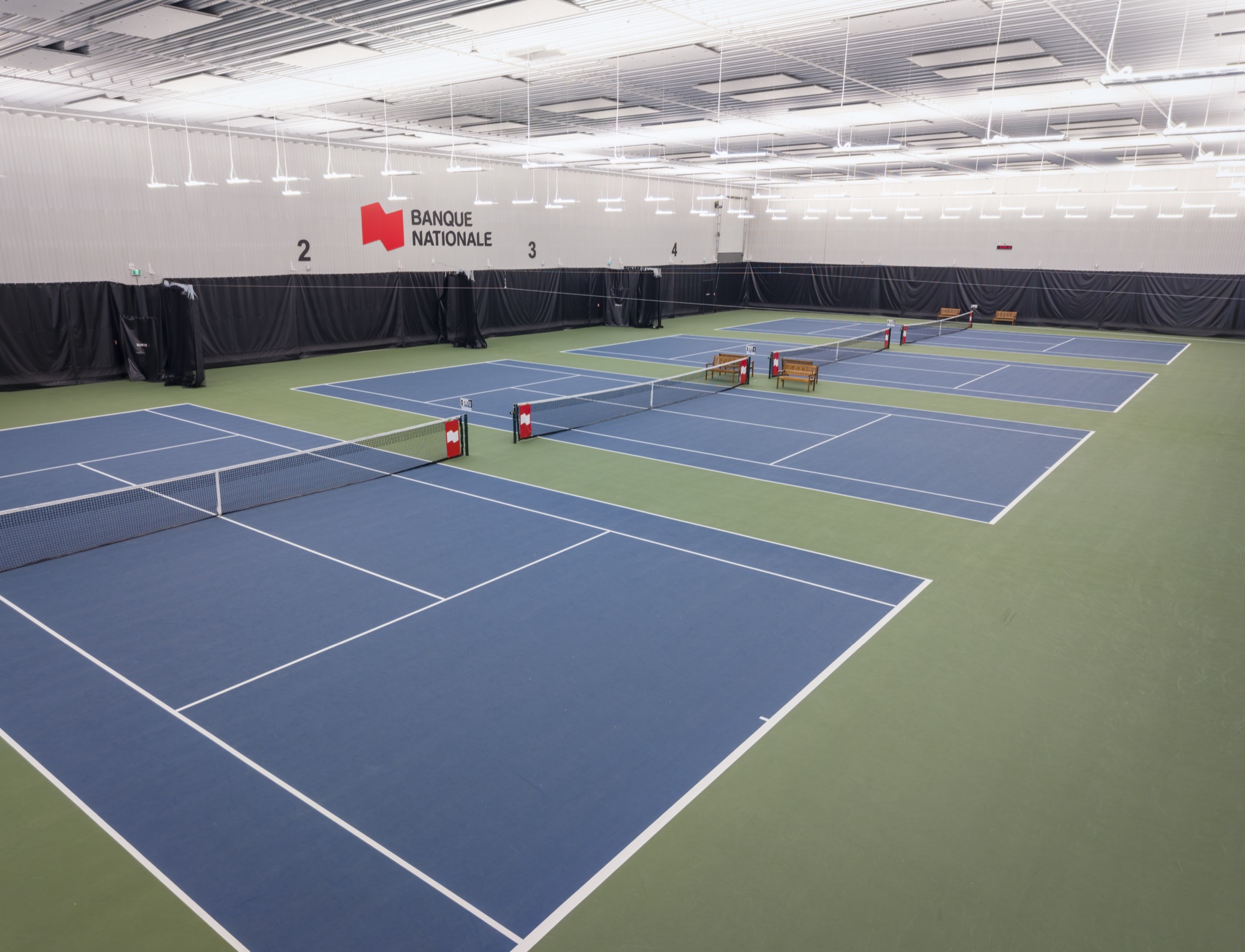
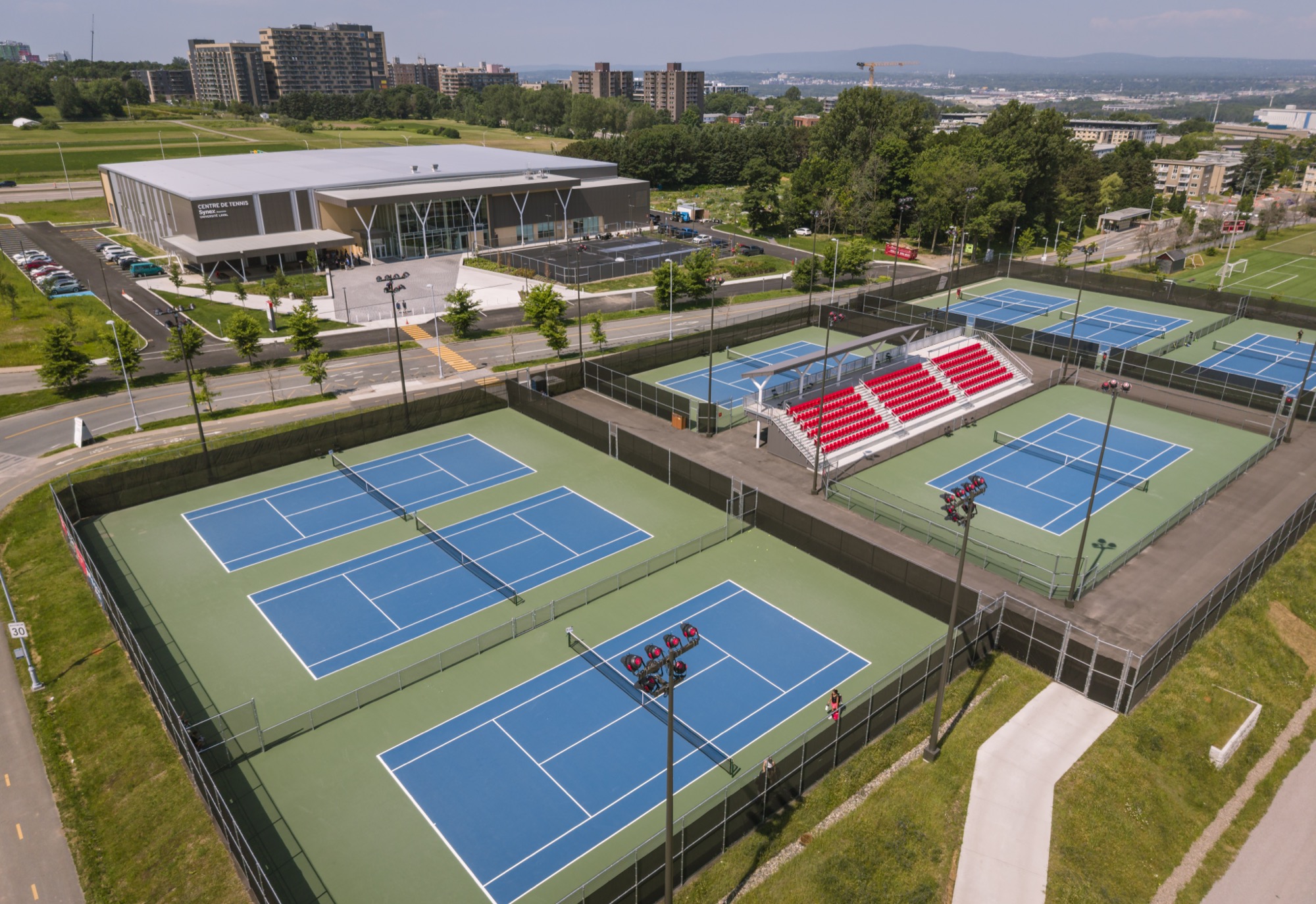
The Tennis Centre is a large complex of courts: eight indoor tennis courts, and eight more outdoors, with six additional pickleball courts as well. “The outdoor courts were designed to meet International Tennis Federation standards and accommodate high-level competition,” Fortier notes. “The result is a facility that serves several audiences at once: university students and athletes, recreational players, the wider community and competitive events.”
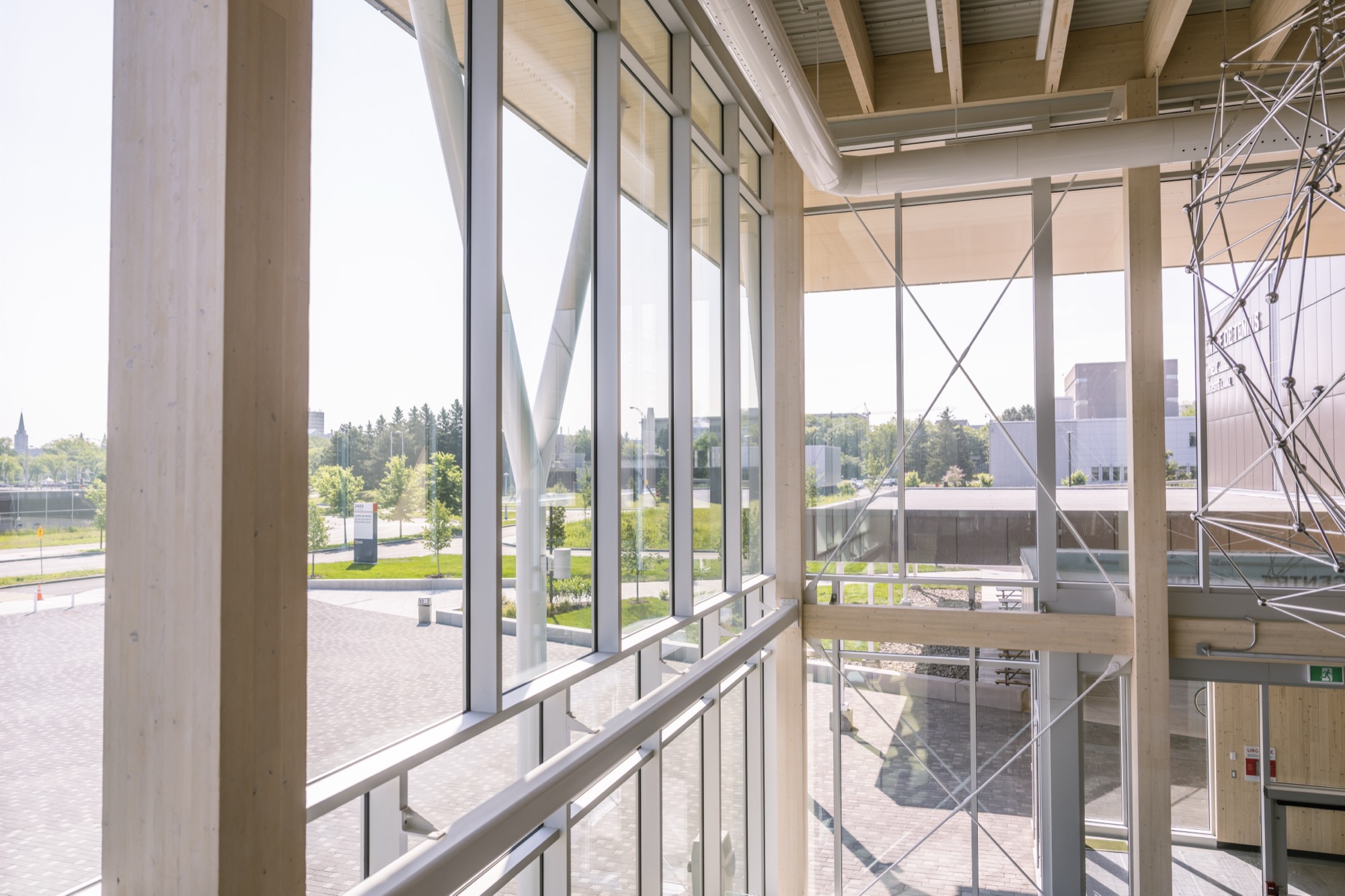
Honco has a long history of designing and building sports complexes across Quebec and Canada. The company has delivered more than 100 sports facilities over its 50-year history, many of them with Bilodeau Baril Leeming Architectes, the design firm on this project, and that experience has given them a better appreciation for the facilities. To Honco, the sports complex is a town square, a new gathering site for a community. It’s important that these buildings reflect their communities. As a result, The Synex Insurance Tennis Centre is designed to be more than a house for courts: it is designed to be open and welcoming to visitors of all kinds, with a spacious entrance hall and mezzanine, relaxation areas, administration offices, and a cafe.
Building a Tennis Court
That long history is what gave Honco the edge during the tender process, Fortier writes. “This was a design-build project led by Honco Buildings in collaboration with Bilodeau Baril Leeming Architectes,” she says. “That delivery model allowed the building solution, architecture, and project requirements to be developed in close coordination.”
While Bilodeau Baril Leeming designed the architectural elements of the project, Honco was responsible for the design-build delivery, also serving as the general contractor. It’s a wide range of responsibilities, made possible by Honco’s established building systems.
Tennis Doubles
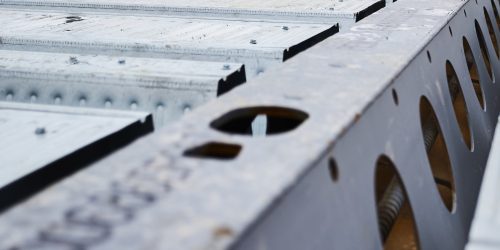
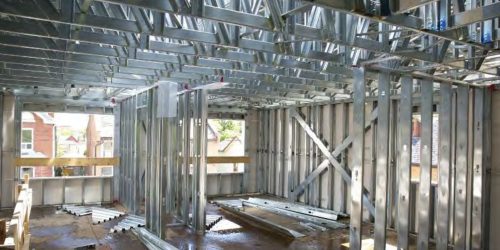
Honco utilizes a proprietary structural steel panel technology that serves as the backbone of all of their projects, including The Synex Insurance Tennis Centre. Where the typical system involves building a structural frame, and then adding cladding outside of it, Honco’s system uses structural steel panels to combine the functions of the structural steel and external cladding into one.
“The Honco system uses cold-formed corrugated steel panels that become structural components of the building itself,” Fortier says. By combining the two elements together, Honco can boast about faster-than-average erection times. The building envelope becomes structural, removing the need for separate erection schedules, streamlining the process.
At the same time, the system also adds the necessary strength that these recreation centres need to be effective buildings. “This approach is especially well suited to recreational buildings because it allows us to create large, unobstructed interior spaces.”
Recreation centres obviously need these large open spaces to avoid interfering with any of the sports played inside. This is important even when the field is smaller, like a tennis court: avoiding interior trusses adds to the atmosphere of play, as well as making the experience much nicer for audiences from an elevated viewing deck.
Shining Lights
“Another important feature is the Galvalume™-finished structural ceiling,” Fortier says. “The finish reflects light within the building, helping create a brighter and more pleasant environment for players and spectators.”
Indeed, light is a critical concern in every Honco project. “You can tell when you’re in a Honco building,” Fortier boasted in a previous conversation about Complexe Multisports Desjardins, an indoor soccer pitch in Lévis, Quebec. Much like structural steel panels are the secret ingredient for the envelope, Galvalume™ is Honco’s signature approach for the emphasis on light. The aluminum, zinc, and silicon coating bounces light across the courts. Reflected light, too, is softer than direct overhead lighting.
“In this case, the ceiling is therefore doing more than performing a structural function,” Fortier notes. “Its finish also contributes directly to the quality of the interior space.”
The added bonus: Galvalume™ is a protective coating — complete with a 40-60 year warranty, depending on covering thickness and application — which helps with the durability and longevity of the flat steel roof. With any luck, the athletic fortunes of the Rouge et Or will last as long as the steel-shelled Synex Insurance Tennis Centre.
SPECIFICATIONS
BUILDING OWNER/PROJECT COMMISSIONER:
Université Laval
DESIGN & BUILD:
Honco Buildings
ARCHITECTS:
Bilodeau, Baril, Leeming Architectes
STEEL:
Honco Buildings
PRODUCTS:
Galvalume™ Steel